
Individuals are scooping up second-hand objects at a file tempo, due to a surge in digital resale platforms like Poshmark, Depop, thredUP and The RealReal. Now extra conventional retailers need in on the motion.
This 12 months alone, Individuals will spend virtually $179 billion on secondhand items, up 96 p.c from 2015, in response to analysis from Mercari and GlobalData. By 2030, these companies contend, that quantity will almost double to $354 billion— a progress price 3.2 occasions that of the retail sector as an entire. And it is not only a small section driving the pre-used market: Three quarters of customers, the Mercari/GlobalData analysis reveals, purchased a minimum of one secondhand merchandise final 12 months.
These numbers are solely a part of the rationale well-known name-brand retailers are actually diving into the "new to you" enterprise too. This embrace of secondhand provides them entry to new prospects, maybe a hedge towards inflation and inexperienced credibility.
"Manufacturers see this wave of re-commerce, or secondhand gross sales, as a possibility just like what occurred with the rise of e-commerce," says Nellie Cohen, who beforehand directed Patagonia's re-commerce program and now runs her personal sustainability consulting agency, Baleen. "Retail execs can see that at any time there are 15,000 of their objects on the market on eBay," Cohen provides. "They'll see the greenback indicators and wish to seize this a part of the client journey."
Certainly they will. Six in 10 retailers already provide secondhand or are critically contemplating it, analysis carried out by thredUP and GlobalData reveals. Greater than 40 p.c of retail executives predict resale will develop into an vital a part of their enterprise throughout the subsequent 5 years. However for a 3rd of retail leaders, adopting a resale program has develop into "desk stakes."
In different phrases: the naked minimal.
Why? "That is the place customers are buying," says a Levi's spokesperson. Provides David Hayne, chief know-how officer of URBN, the mum or dad firm of City Outfitters, Free Individuals and Anthropologie: "Our...manufacturers have been already a few of the most sought-after manufacturers on the resale market, so there was a giant alternative to activate these loyal prospects."
How Manufacturers Promote Secondhand
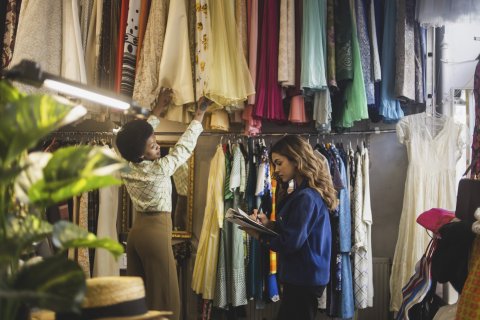
There are three primary methods firms interact with secondhand. The simplest: accomplice with on-line resale platforms, utilizing their infrastructure and marketplaces to encourage folks to resell their objects in change for retailer credit score. Some who do that with thredUP: Abercrombie & Fitch, Crocs, Adidas, Reformation, Hole, Athleta, Banana Republic and Christy Daybreak.
Others get extra instantly concerned, permitting you to convey outdated objects, bearing their labels, again in change for retailer credit score or reductions on new merchandise. The retailer then resells the outdated stuff. Apple, Greatest Purchase, Amazon and GameStop all provide this selection for sure electronics. Eileen Fisher, Levi's, Allbirds, Lululemon, Rachel Comey, REI, Patagonia, and Arc'teryx resell attire, footwear and outside gear purchased from them. And choose IKEA shops have additionally begun shopping for again the model's assembled furnishings and promoting it of their "As Is'' division.
Some retailers are even working their very own customer-to-customer resale platforms: Attire large ASOS operates such a market; URBN launched its personal platform, referred to as Nuuly Thrift, in October and H&M launched its model in Canada final September.
Is Resale Good for Prospects?
Properly, it relies upon.
Anticipate to earn much less in your outdated stuff by promoting it to a retailer versus, say, on eBay, the place you identify the value. REI estimates it pays about half the retail value for its prospects' used items, Levi's says it pays $15 on common for a pair of its used denims, and Lululemon pays $10 for its outdated leggings, hoodies, luggage and attire.
Shopping for by means of a model's secondhand program generally is a sweeter deal although. Costs are similar to many listings you may see on resale marketplaces, and objects include the assure that they are genuine, clear, within the situation listed and returnable.
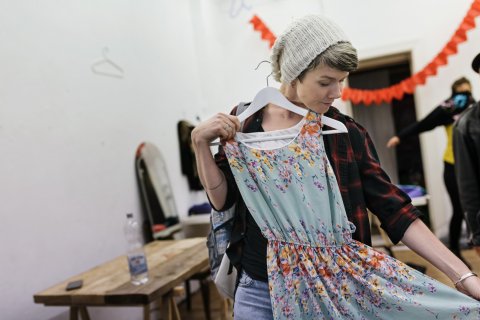
No matter private revenue, customers general like having the choice to purchase secondhand from their favourite manufacturers and snag a beloved merchandise at a lowered value. REI's resale enterprise, for instance, bought greater than one million objects in 2021. And the retailers say these applications are attracting new purchasers, notably youthful, eco-conscious and finances patrons, as they supply entry to higher-end, aspirational items. As an illustration, a pair of used Lululemon align leggings sells on the model's "like new" web site for $49, or 44 p.c lower than a brand new pair, which retails for $88.
Secondhand's smaller value tags may be a win-win for manufacturers and customers as inflation continues to rise. A Harris Ballot, carried out in April, discovered that 84 p.c of Individuals are planning to dial again their spending because of value hikes.
"Individuals wish to make extra of their budgets and the cash they've," says Neil Saunders, managing director at GlobalData.
The "Inexperienced" Angle
"The sustainability facet is rising in significance, particularly amongst millennials and Gen Z, who take a look at secondhand buying as a technique to scale back their footprint," says Saunders. Provides Ken Voeller, REI's director of round commerce and new enterprise growth: "Extra of our members are recognizing that purchasing used is a technique to scale back the environmental influence of their buying choices."
And it may be. Sporting a garment for simply three further months results in a 5 to 10 p.c discount in its carbon, water and waste footprint, in response to the Waste and Sources Motion Program. Moreover, REI discovered that promoting a used merchandise has a 50 p.c smaller carbon footprint than promoting a comparable new merchandise, in response to Voeller.
As prospects more and more perceive the environmental toll their buying can take, they're pushing firms to undertake extra sustainable options. Half of Individuals have already shifted their buying habits to be greener prior to now 5 years, Simon-Kucher & Companions discovered, and greater than half of style and textile executives mentioned shopper demand was driving their pursuit of environmental-friendly practices, of which secondhand is a best choice.
"Resale is a really palatable program to the C-suite," says Cohen. "When it comes to sustainable adjustments, it is pretty straightforward to do" and one of many few that may make cash and garner new gross sales.
To make certain, some consultants additionally stay skeptical over simply how earth-friendly these resale applications actually are. Cosette Joyner Martinez, a professor of merchandising at Oklahoma State College, notes that the secondhand growth doesn't appear to be slowing folks's consumption or retailers' manufacturing of latest objects. Virtually all trade-in or buyback applications rewarded prospects with retailer credit score, thus encouraging them to purchase one other product. And typically that credit score was solely good for purchases of latest objects.
No matter how planet-helping these applications are, the secondhand frenzy will solely develop extra fashionable with C-suiters—not just for the gross sales however the alternative to draw a brand new technology of shoppers. And that's, as all the time, the underside line.
Post a Comment