
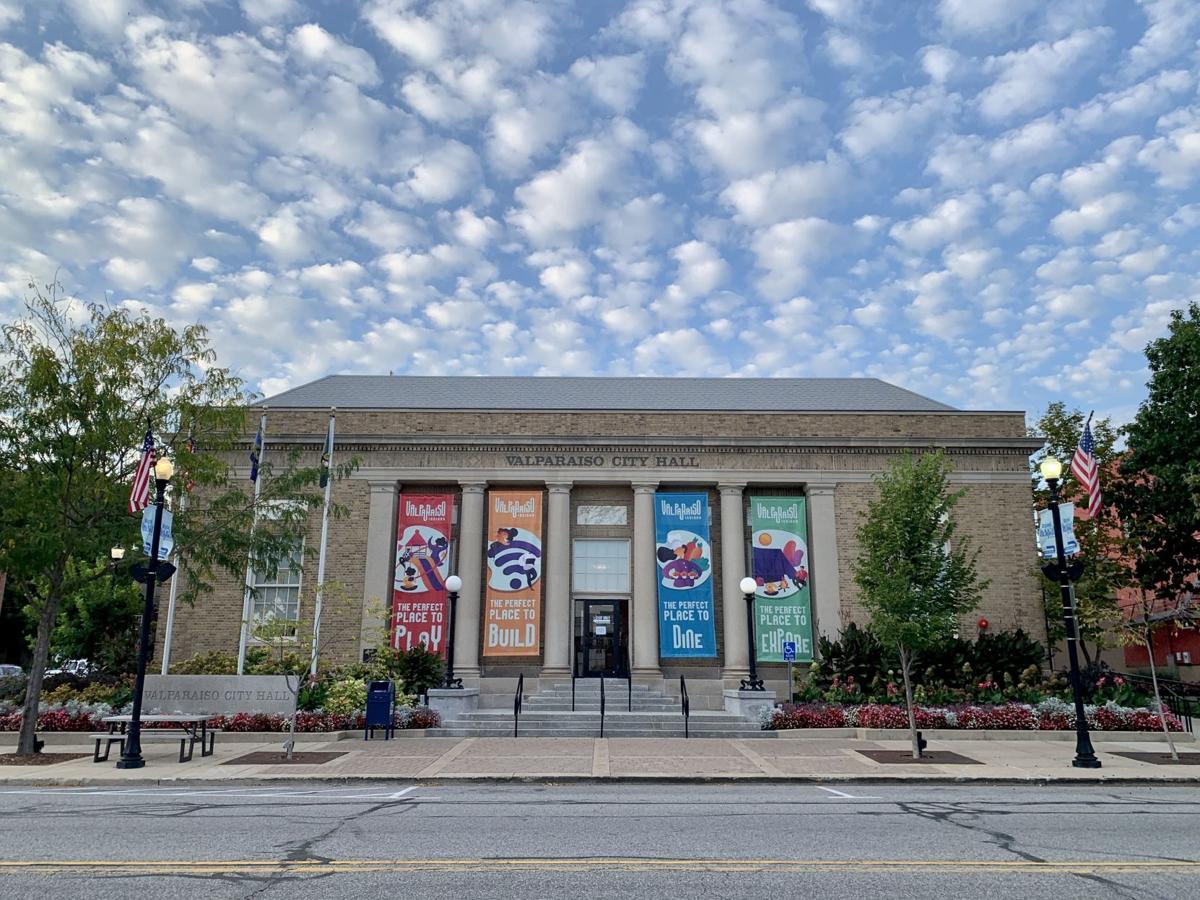
“If a community says that ‘we don’t have any homeless residents,’ it likely means there are few local resources available and their struggling residents move to more welcoming communities that offer shelter, food, clothing, health services and transportation,” Patrick Lyp said. “A community like Valparaiso.”

Jerry Davich
Jerry’s career began in 1995 as a political cartoonist/columnist with The Times of NWI, writing thousands of columns and stories through narrative storytelling, or shining a light on society’s darkest corners, or provoking unpopular conversations.
Today’s column is the third in an ongoing series on the hidden homeless population in our Region, prompted by an older woman in Valparaiso who hauls her belongings in a shopping cart and often sleeps inside a government office.
“My hopes are that she is somewhere safe and warm,” said Jill Stefanski, who first reminded me about this controversial issue in her city. “I have not found her again.”
In response to my first two columns, more than two dozen new sources have contacted me regarding this complex topic, including a handful of people who were once without a permanent home, and several organizations on the front lines of homelessness. (Read my previous column at nwi.com under a search for my name.)
As Northwest Indiana braces for another frigid spell of dangerous temperatures, I reached out to the City of Valparaiso for input about its efforts to address a chronic issue that plagues every community to some degree.

“The typical observation is that the city does not care,” Valparaiso city attorney Patrick Lyp said. “That could not be further from the truth. Valparaiso is an incredibly generous and giving community.”
“The city’s primary interaction with homeless individuals is through the Valparaiso Police Department and EMT services,” Patrick Lyp, the city’s attorney, told me. “If an individual appears to be a danger to themselves or others, there is a legal process that is followed. More often than not, the individual is not a danger to themselves or others.”
This process includes working with the courts and Porter-Starke Services in that city, he said.
“Fortunately, unlike many communities, Valparaiso Police Department invested in a full-time social worker. In speaking to various officers, this has been a great resource,” Lyp said.
The Police Department will encourage a homeless individual to meet with the department’s social worker, Samantha Burgett, to connect them with available local services and resources, he said.
“In times of extreme heat or cold, there are locations within the city where individuals can stay,” Lyp said. “That said, the outcome of an interaction with a homeless individual is often that they do not want any assistance. Again, without a determination that an individual appears to be a danger to themselves or others, or the individual wants the help of the VPD social worker, the city’s options are extremely limited.”
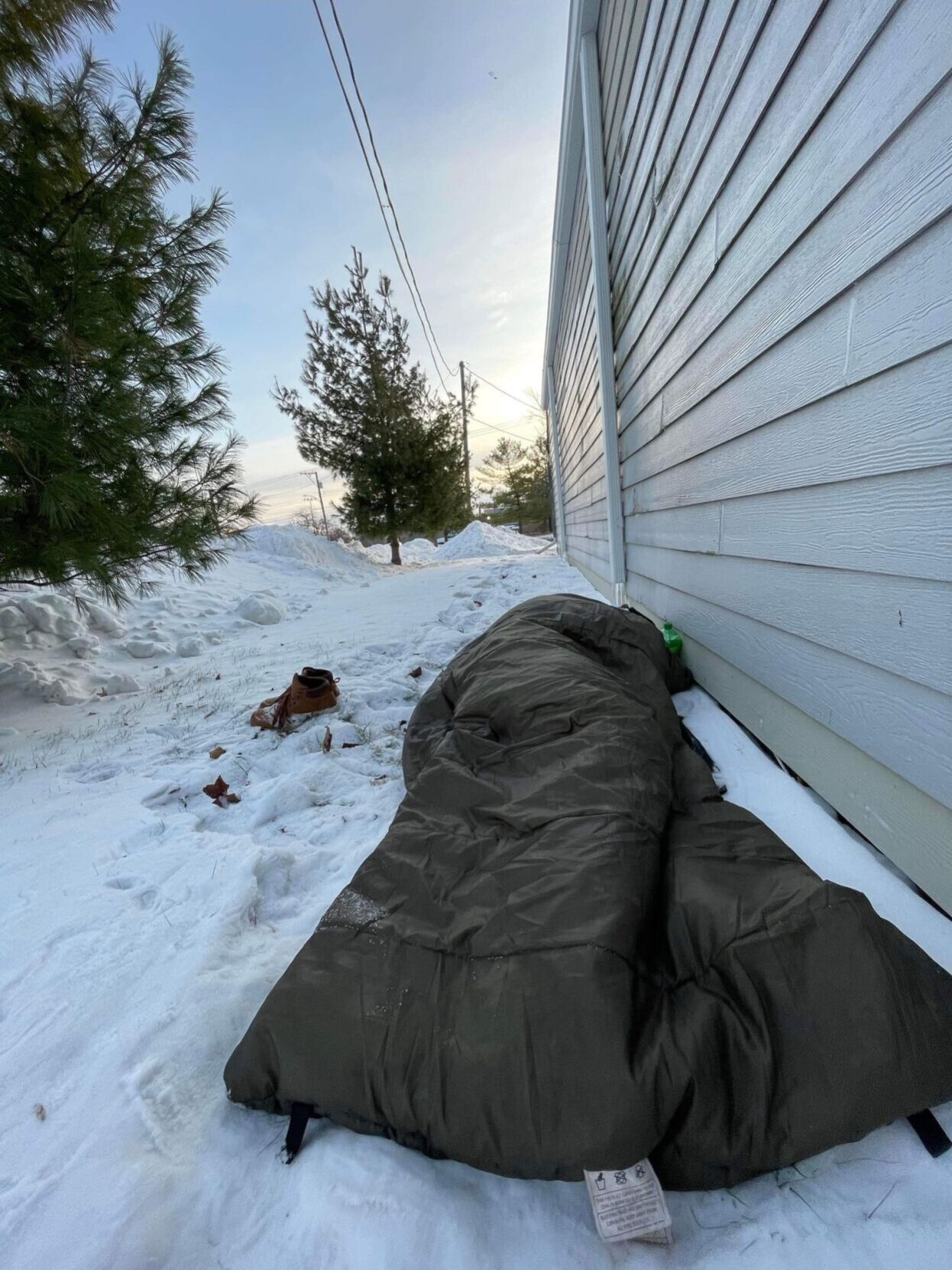
Many homeless situations do not conveniently fit the stereotype of a drug addict or mentally ill man who lives under an overpass. In this photo, a homeless person sleeps outside a building in Valparaiso.
The working definition of someone suffering from homelessness is an individual or family who lacks a fixed, regular and adequate nighttime residence. The City of Valparaiso does not keep such statistics on the number of homeless individuals.
For several years, the local nonprofit organization New Creations has worked with churches in the city to offer temporary overnight shelter to homeless individuals. Living Hope Community Church is one of these churches.
Last month, its pastor, Rich Schmidt, was contacted directly by Lyp, during his vacation, to tell Schmidt that if the church was willing to open its doors as an overnight shelter, the city wouldn’t stand in its way.
“He only asked that we have someone present and awake all night on ‘fire watch,’ since the fire department required it,” Schmidt said.
The needed variance application process to do so through the state would otherwise take weeks or months to complete.
“So that’s what we did,” Schmidt said.
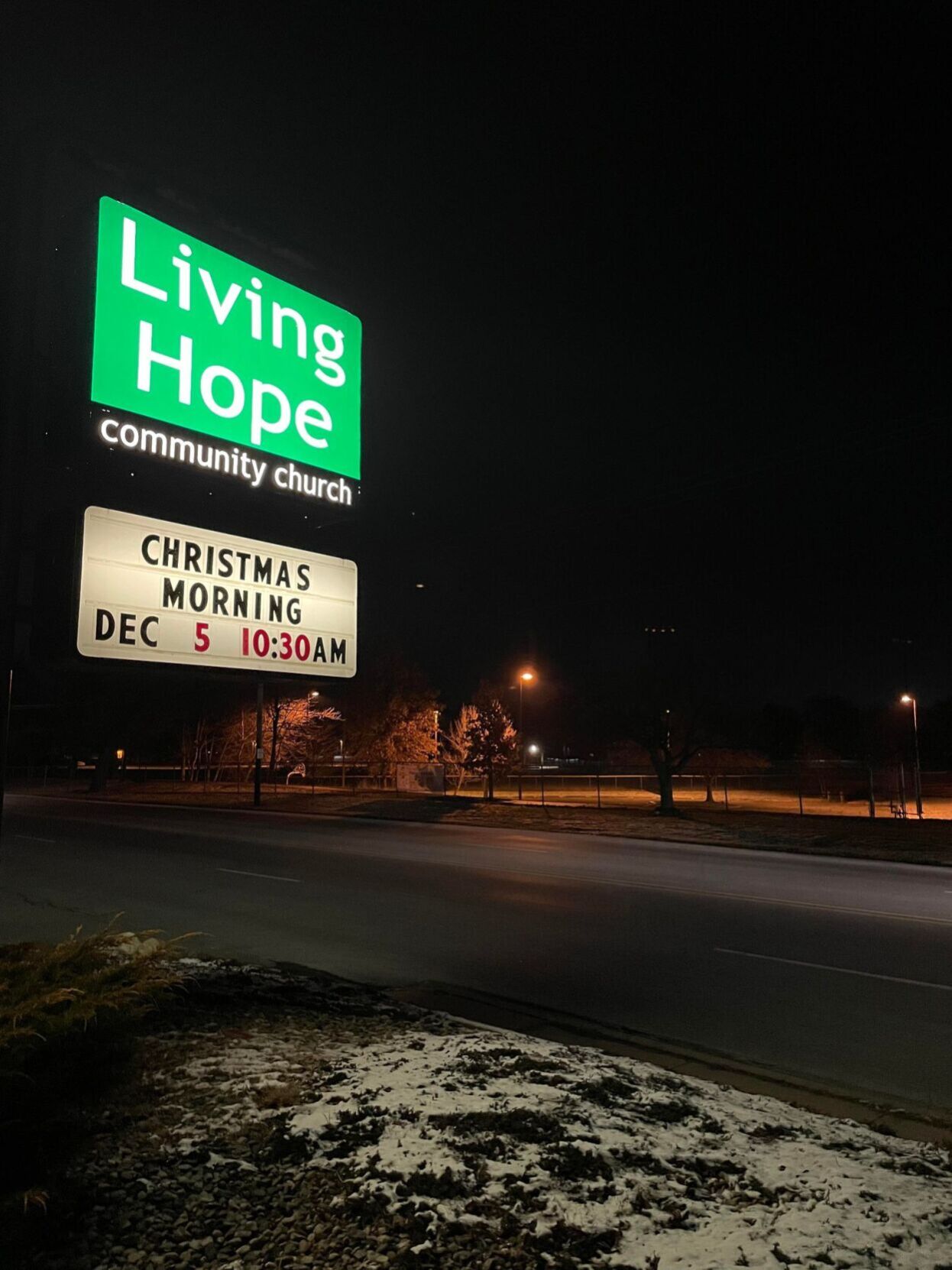
Living Hope Community Church in Valparaiso opens its foyer between the front doors to people in need of overnight shelter. “The situation at our church is basically that we care about these homeless neighbors of ours. And we are doing all we can to welcome them and help them,” said Rich Schmidt, pastor at Living Hope Church.
His church provided an emergency overnight warming center from 8 p.m. to 7 a.m. during a winter storm in late December, and again in early January.
“We plan to offer it every night until the overnight temperatures stop trending below freezing, so maybe around the end of February or beginning of March,” Schmidt said.
Lyp shared with me a few personal observations about the broader aspect of this topic. He pointed out that some city residents, and media members (including me), “have found it easy to criticize Valparaiso on issues of affordable housing and the city’s response to homelessness.”
He’s right. I’ve been critical about the degree of empathy or compassion for the hidden homeless population in my own city.
“The typical observation is that the city does not care,” Lyp said. “That could not be further from the truth. Valparaiso is an incredibly generous and giving community.”
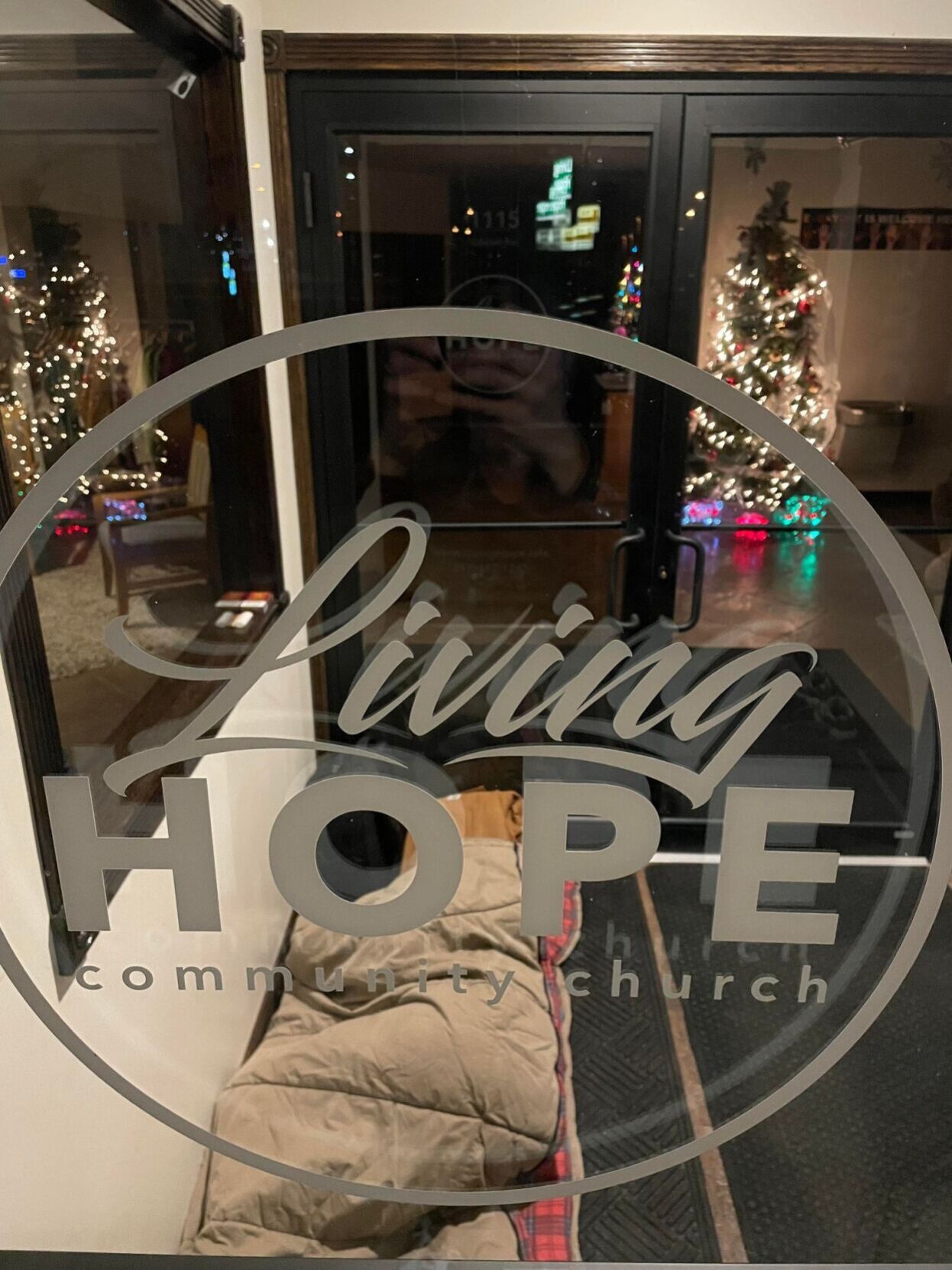
A person sleeps in the foyer between the front doors of Living Hope Community Church in Valparaiso. On some nights, as many as five people find holy refuge inside this cramped foyer from the weather, from police or from their demons.
“I recognize the temptation that if you see an unhoused individual along Calumet Avenue in Valparaiso, the immediate reaction is to ask why Valparaiso doesn’t do more,” Lyp said. “From that, others build the narrative that the mayor and City Council are uncaring and are not doing enough. Although it makes some feel good blaming the city, it’s a lazy position, and I’d suggest the opposite is true.”
The city is home to Housing Opportunities, Project Neighbors, New Creations, Hilltop Neighborhood House and Food Pantry, Dressed for School, HealthLinc, Respite House, Walt’s Place, Caroline’s Place, Porter-Starke and Caring Place, to name a few, Lyp said.
“Each organization works to address housing and other issues for those most needy,” he said.
As identified in the city’s March 2021 comprehensive housing study, Valparaiso has 51% of Porter County’s 1,445 income-restricted residential units, though it represents approximately 20% of Porter County’s overall population, he noted.
This number has increased with the conversion of Uptown Apartments (121 units in 2022) and the construction of Green Oaks (120 units in 2023), he said. Lyp also reminded me that Valparaiso University unsuccessfully sued the city to block the Uptown affordable housing project.
The city operates, and financially supports, the V-Line, a public bus system that caters primarily to those people without transportation, he noted. And in March 2022, the city announced an award of $150,000 to Respite House to build a new men’s homeless and warming shelter.
“That project is moving forward and has the full support of the city,” Lyp said.
He pointed out that other communities across Northwest Indiana could — and should — be more welcoming to its homeless population, and make it easier for Section 42 housing projects to exist. The same goes for communities that could and should offset the challenges faced by some of our Region’s struggling urban areas.
“If a community says that ‘we don’t have any homeless residents,’ it likely means there are few local resources available, and their struggling residents move to more welcoming communities that offer shelter, food, clothing, health services, and transportation,” Lyp said. “A community like Valparaiso.”
Post a Comment